Silicon Wafer Edge Trimming Techniques: Adjusting Size and Shape for Specific Applications

-
 July 9, 2024
-
 WaferPro
-
0


At WaferPro, we understand that achieving the optimum silicon wafer size and shape is critical for device functionality and yield in semiconductor fabrication. As a leading manufacturer of wafer processing equipment, we offer a variety of edge trimming tools to trim, profile, and texture the edges of silicon wafers. Our innovative wafer edge trimming techniques enable precision adjustments to wafer dimensions and edge profiles for meeting the requirements of different applications.
The Importance of Silicon Wafer Edge Trimming
The edges of silicon wafers impact multiple aspects of device performance and fabrication yield:
- Edge integrity affects wafer handling, automated processes, and safety
- Edge profiles influence device characteristics and lithography processes
- Precise edge shapes and dimensions allow accurate alignments and repeatable processes
By fine-tuning the wafer edges, manufacturers can optimize chips and devices for factors like:
- Yield
- Reliability
- Electrical performance
- Interconnects
- Compatibility with tools and processes
In short, properly trimmed wafer edges are vital for fabrication yield, device functionality, and ensuring process repeatability across wafer batches.
Key Wafer Edge Trimming Techniques
WaferPro provides dedicated wafer edge processing equipment and expertise to trim, profile, and texture silicon wafer edges.
Here are some of the essential wafer edge trimming techniques offered by our tools:
Edge Profiling
Creating precise edge profiles, which involves shaping wafer edges to particular angles or geometries. Common examples include:
- Flat profiles: Straight, even bevel from edge to a defined width
- Slope profiles: Gradual angled slope from edge over a set distance
- Compound and variable profiles: Combinations of flat, sloped, and curved sections
Edge profiling controls factors like edge strength, edge conduction, and compatibility with process tools.
Edge Texturing
Applying microscopic textures onto the wafer edge surface, usually on sloped edge profiles. Popular textures include:
- Random pyramids
- Periodic grooves/line patterns
- Pillars/mesas
Texturing improves edge strength and chucking performance during high-speed wafer handling.
Edge Rounding
Smoothing wafer edges to control edge geometry, remove defects, and create rounded profiles. This improves overall edge integrity and handling performance.
Notching
Introducing notch or flat cutouts on wafer edges to indicate crystal orientation and wafer identification. Notches enable proper orientation and tracking.
Common notch types include:
- Standard SEMI notches
- Custom notches
With our advanced notch alignment and control, we can introduce notches with high positional accuracy.
In addition, we also offer techniques like edge thinning to control edge conduction and device leakages based on customer requirements.
Achieving Target Specifications
Every wafer edge trimming application aims to achieve some target specifications related to:
- Wafer dimensions
- Edge geometries
- Surface roughness
- Number and placement of notches
- Other critical parameters
Our edge trimming tools have advanced sensors, metrology, and control systems to meet target specifications precisely and repeatedly trim batch after batch.
For example, our fully automated cassette-to-cassette systems can trim 300mm wafers to tolerances within:
- +/- 0.15mm edge exclusion zone
- +/- 0.01mm wafer diameter
- +/- 0.02mm wafer thickness variation
In addition to post-trim metrology, we also provide real-time feedback of critical process parameters for closed-loop control. This enables adjustments during the trimming process to meet specifications. Our advanced process controls combined with flexible programming support rapid optimization of edge trimming recipes.
Table 1 shows some common target specifications for wafer edge trimming. However, we can program our tools to achieve many other custom specifications required by fabs and foundries.
Table 1: Typical target specifications for 300mm silicon wafer edge trimming
| Parameter | Sample Specification |
|---|---|
| Diameter | 300.00mm ± 0.10mm |
| Thickness | 775μm ± 25μm |
| Total Thickness Variation (TTV) | < 2μm |
| Flat or Notch Positional Accuracy | ± 0.10mm |
| Edge Profile Dimensions | Flat section: 0.5mm ± 0.05mm <br> Slope section: 15o +/- 0.20o |
| Surface Roughness (edge and flats) | < 10 nm Ra |
| Edge Defects | No chips, cracks >100μm |
Contact our team to discuss your specific wafer edge requirements. With flexible programming and advanced metrology systems, our tools can achieve practical target specifications for parameters like diameter, thickness, geometries, roughness, and more.
Optimizing Edge Trimming Recipes
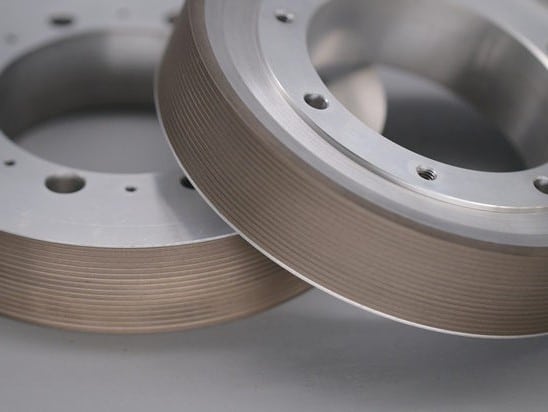
Achieving target edge trimming specifications require optimizing the process recipes used by the wafer processing tools. Recipe optimization involves adjusting parameters like:
- Wheel materials: Diamond or SiC wheels based on material removal rates and surface finish needs
- Wheel grit size: Coarse or fine grit for high throughput or mirror polishing
- Feed rates: Wafer rotation and wheel advance speeds impact cut depth per pass
- Texturing tools: Select diamond-coated tools for different texture patterns
- Coolants: Water or oil-based fluids regulate wheel temperatures and surface finishes
- Access angles: Adjusting wafer and wheel angles change edge cutting dynamics
At WaferPro, we take recipe optimization very seriously and draw on decades of experience trimming millions of wafers worldwide. Our applications engineers conduct rigorous DOEs (design of experiments) to determine the ideal recipes for customer requirements using parameters like those above.
We also encourage customers to conduct production prove-in runs at our demonstration labs. This allows confirming recipe performance and fine-tuning parameters if needed, before deploying tools in high-volume manufacturing lines.
Metrology and Feedback Systems
A major factor that enables reliable edge trimming to precise specifications is the advanced metrology and feedback systems integrated into our tools.
In situ and ex situ measurements provide visibility over parameters like:
- Remaining wafer thickness
- Kerf width/cut depth per pass
- Wheel state and material removal rates
- Texture quality and surface roughness
- Post-trim dimensions and geometries
- Defect inspection
In addition, we offer real-time analytics of wafer, wheel, and coolant conditions using sensors and cameras to collect data like:
- Wafer temperature
- Acoustic emissions
- Wheel wear and force feedback
- Coolant flow and conductivity
- Edge imaging
- Thickness measurements
The data helps fine-tune recipes during trimming and also gets analyzed after production for monitoring equipment health and improving future processes.
This combination of advanced metrology and real-time analytics is key to achieving repeatable, optimized wafer edge trimming results regardless of incoming wafer conditions and target specifications.
Equipment Flexibility
A key strength of WaferPro’s edge trimming platforms is flexibility:
- Configure to order: Customize machine layouts to factory space constraints
- Process flexibility: Recipe programming for various profiles, geometries, textures
- Volume scaling: Scale from R&D to high-volume production
- Wafer size handling: Retrofits available for evolving wafer sizes
- Automation: Cassette-to-cassette systems or integration with factory handling systems
This flexibility allows customers to balance throughput, precision, automation level and operational constraints when implementing wafer edge trimming steps. One machine can meet current needs while having upgradability to address future volume or process changes.
Service and Support
After installation, WaferPro continues supporting customers with services like:
- Preventive maintenance: Keep tools running optimally
- Spare parts: Ensure availability of any replaceable items
- Process audits: Review recipe performance and identify improvement areas
- Operator training: Enhance expertise for achieving production targets
- Upgrades: Add capabilities to handle new processes or volumes
- Remote diagnostics: Rapid identification and resolution of system issues
Our dedicated service teams strive to maximize equipment utilization and process capability through the system lifecycle. We view our customers as long-term partners.
Conclusion
Precision wafer edge trimming unlocks benefits in fabrication yield, cycle times, tool compatibility, and overall device performance. As pioneers in wafer edge processing equipment, WaferPro helps customers achieve reliable, repeatable edge trimming techniques for their specific semiconductor manufacturing needs.
With broad expertise across wafer sizes, process types, and factory integration models, we aim to deliver flexible and optimized wafer edge trimming solutions. Contact our engineers to discuss how WaferPro can help you meet target specifications for your wafer edge requirements.

Can’t find wafers that meet your desired specs? No problem! We can build wafers with unique specifications to meet your needs.
Request a quote


Our online store features a wide variety of wafer sizes, orientations, dopants, thicknesses, and more.
Shop online
-
 1286 Alma Ct, San Jose, CA 95112
-
 + 1 408 622 9129
-
sales@waferpro.com
-
Monday – Friday,
9:00 a.m. to 6:00 p.m.


